WHY MAKE IT
A little comfort, a lot of flavor.
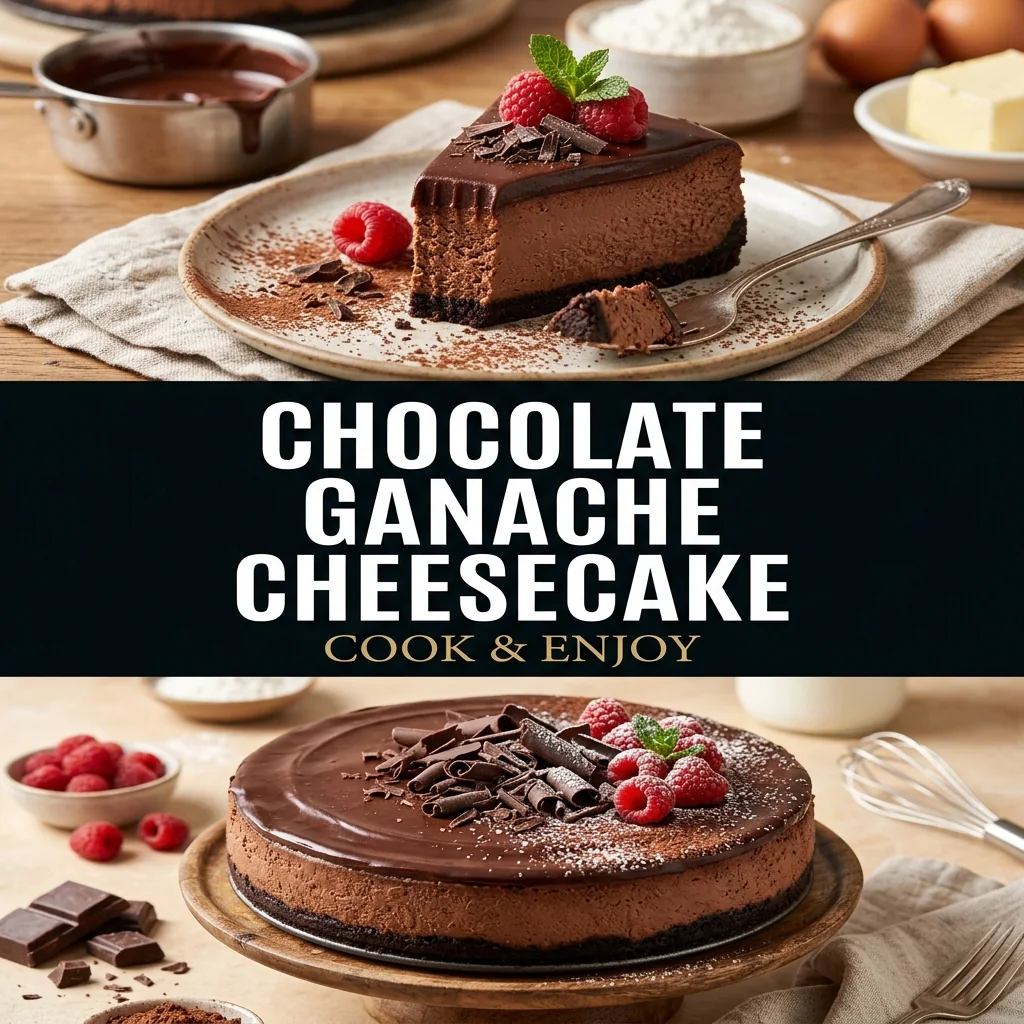
Chocolate ganache cheesecake delivers deep, cocoa-forward flavor without compromising the tender, creamy consistency expected of a classic baked custard. By employing both melted bittersweet chocolate and Dutch-process cocoa powder, the filling gains complex bittersweet notes balanced by the natural acidity of sour cream and lactic tang of cream cheese. The dark chocolate sandwich cookie crust provides a crisp, bittersweet foundation that anchors the velvety filling. Finishing the chilled dessert with a warm, glossy chocolate ganache creates an elegant dual-texture presentation that sets into a satiny glaze. Baked slowly in a water bath, this dessert remains free of dry edges and maintains a luxurious crumb.
Balancing Chocolate Solids and Fats
Chocolate adds cocoa butter and cocoa solids to a cheesecake batter, which alters how the proteins set compared to plain vanilla fillings. Bittersweet chocolate around sixty percent cocoa offers rich flavor without excessive sweetness, while Dutch-process cocoa powder amplifies deep color and earthy undertones. Because cocoa butter solidifies firmly when chilled, this cheesecake naturally sets firmer than fruit varieties. Incorporating sour cream in the filling preserves moisture and ensures the finished crumb remains spoonable, velvety, and luxurious rather than chalky or dry on the palate.
Achieving Glossy Ganache
A flawless ganache requires an emulsion between heavy cream and chocolate solids. Chopping the chocolate finely allows the hot cream to melt it evenly without requiring direct, aggressive stovetop heat that might scorch the cocoa butter. Whisk gently from the center outwards in small concentric circles to encourage a tight, stable emulsion without generating frothy air bubbles. Pouring the ganache when it is lukewarm allows it to level itself across the cold cheesecake without melting the top surface or pooling unevenly.
Water Bath Protection
Chocolate custards can overcook at the edges before the center is set. A water bath acts as a thermal buffer, ensuring the perimeter does not climb above the boiling point while the dense interior sets. When testing doneness, check that the outer three inches feel set to a gentle tap while the inner circle still displays a controlled wobble. The residual heat trapped inside the cheesecake will finish setting the custard during the controlled oven cooling stage.
Before you start
Temper the melted bittersweet chocolate carefully before adding it to the batter. If the melted chocolate is hot, it will cook the raw eggs and melt the cream cheese fats, causing the batter to curdle and separate. If it is too cold, it will solidify into tiny hard chips upon contact with the cooler dairy ingredients. Aim for lukewarm chocolate that flows easily and feels neutral to the touch.
THE RECIPE
Chocolate Ganache Cheesecake
14 servings · 45 minutes preparation · 70 minutes cooking · 450 minutes cooling, chilling or resting
Ingredients
Step-by-step instructions
- Preheat the oven to 325°F (163°C). Combine finely crushed chocolate sandwich cookies and melted butter in a medium bowl until the crumbs cling together. Press the mixture firmly into an even layer along the base of an ungreased 9-inch (23 cm) springform pan, bake for 10 minutes, and cool completely on a wire rack.
- Line the exterior bottom and outer walls of the springform pan with three sheets of heavy-duty foil, pressing securely around the rim to create a watertight barrier. Place the wrapped pan inside a large roasting pan on your counter.
- Melt the bittersweet chocolate in a heatproof bowl set over a pot of barely simmering water, stirring occasionally until glossy; set aside to cool until barely warm to the touch. Sift the cocoa powder into a small bowl to ensure no compact lumps remain.
- Beat the room temperature cream cheese and granulated sugar in a stand mixer on low speed for 3 minutes until smooth. Add the sifted cocoa powder, sour cream, vanilla extract, and salt, mixing on low speed until combined, then scrape down the paddle and bowl thoroughly.
- Pour the cooled melted chocolate into the cream cheese mixture with the mixer running on low speed until completely incorporated. Add the room temperature eggs one at a time, mixing on low speed just until each egg yolk vanishes, taking care not to whip excess air into the dense mixture.
- Pour the chocolate batter over the baked cookie crust. Transfer the roasting pan to the oven and pour boiling water into the outer pan until it reaches halfway up the side of the springform pan. Bake at 325°F (163°C) for 55 to 60 minutes until edges are set and center wobbles slightly.
- Turn off the oven, leave the door propped open by two inches with a wooden spoon, and allow the cheesecake to cool slowly for 60 minutes. Remove the pan from the water bath, strip away the foil, run a paring knife along the rim, and chill uncovered for 6 hours.
- Heat heavy cream in a small saucepan until steaming, pour over chopped semisweet chocolate in a heatproof bowl, let stand for 2 minutes, then whisk smooth. Pour the lukewarm ganache over the chilled cheesecake, tilt to spread evenly to the edges, and chill 30 minutes before serving.
Kitchen notes
Temper the melted bittersweet chocolate carefully before adding it to the batter. If the melted chocolate is hot, it will cook the raw eggs and melt the cream cheese fats, causing the batter to curdle and separate. If it is too cold, it will solidify into tiny hard chips upon contact with the cooler dairy ingredients. Aim for lukewarm chocolate that flows easily and feels neutral to the touch.
Storage & make-ahead
Store the finished cheesecake covered in the refrigerator for up to 5 days. Slices can be frozen once the ganache has set firmly; wrap portions individually in plastic wrap and heavy aluminum foil for up to 2 months. Thaw frozen portions overnight in the refrigerator. Slicing with a warm knife ensures clean edges through the firm ganache.
An original recipe guide inspired by themes in our Pinterest research. Recipe has not been independently kitchen-tested. AI-generated image is illustrative; your finished dish may look different.
Frequently asked questions
Can I use milk chocolate instead of bittersweet chocolate?
Milk chocolate contains significantly higher sugar and dairy solids and less cocoa mass, which will make the cheesecake overly sweet and unpleasantly soft. Stick to dark or bittersweet chocolate between 55 and 70 percent cacao for structural integrity and balanced flavor.
Why did my chocolate seize when added to the cream cheese?
Chocolate seizes if added to cold ingredients. Ensure your cream cheese, sour cream, and eggs are strictly at room temperature (around 68°F to 72°F / 20°C to 22°C) and the melted chocolate remains lukewarm and fluid before blending.
How do I cut clean slices through the chilled ganache?
Dip a thin-bladed chef's knife into a tall container of hot water for fifteen seconds, dry the blade completely with a paper towel, and press gently through the ganache and cake. Clean and reheat the blade between each slice.