WHY MAKE IT
A little comfort, a lot of flavor.
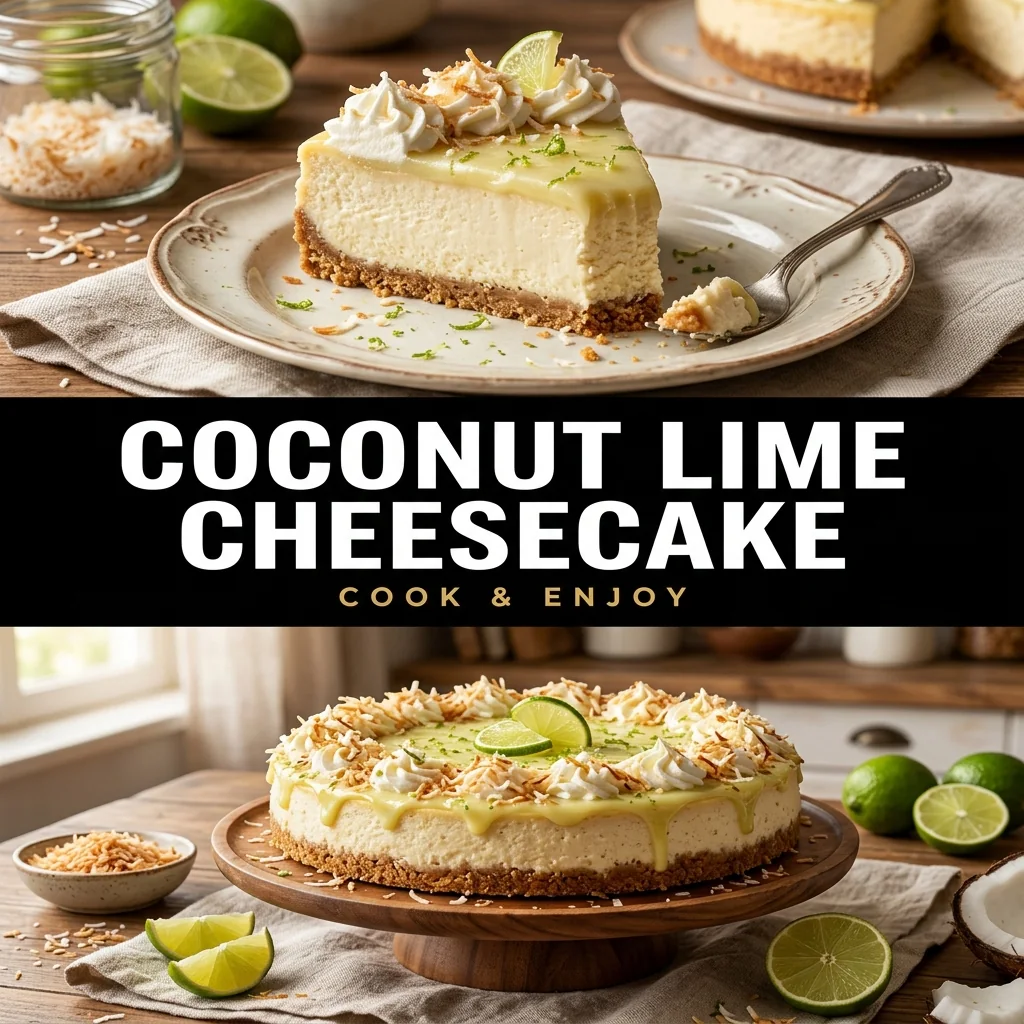
Coconut Lime Cheesecake balances luxurious dairy richness with the bright, mouthwatering punch of tropical citrus. Many commercial cheesecakes struggle with heavy textures, but integrating unsweetened coconut cream alongside fresh Persian lime juice breaks through dense fat while delivering an exceptionally velvety crumb. The base departs from plain graham crackers by incorporating deeply toasted desiccated coconut, which contributes crunch and nutty warmth to ground the tartness above. Baking gently in a standard hot water bath guarantees an even rise without sunken centers or unsightly fissures. This dessert presents an elegant centerpiece for spring dinners, summer barbecues, or celebratory gatherings where a refreshing twist on classic New York style cheesecake makes a lasting impression on guests.
Balancing Fat and Acid
The combination of high-fat cream cheese and acidic lime juice requires careful mixing to maintain an emulsion. Unsweetened canned coconut cream provides body and subtle floral richness without masking the vibrant lime profile. When zesting the citrus, use a fine rasp grater and exert light pressure to harvest only the green outer peel; the white pith underneath introduces bitter notes that sour the batter during baking. Mix the juice and coconut cream in gently, then avoid overbaking to preserve a creamy texture.
Water Bath Precision
Custards and baked cheesecakes require low, indirect thermal energy to cook smoothly from exterior to core. A hot water bath acts as a protective buffer, capping ambient cooking temperatures near 212°F (100°C) around the base of the cake. To safeguard your crust from water intrusion, utilize wide, commercial-grade heavy aluminum foil, or place the springform pan inside an oven-safe silicone sleeve before setting it into the roasting vessel. Gradual baking prevents the eggs from over-coagulating, eliminating grainy textures and preserving the luscious, glossy interior.
Cooling and Serving
Rapid temperature shifts represent the leading cause of structural failure in baked cheesecakes. Allowing the cake to cool gradually inside the powered-down oven prevents the delicate matrix from contracting too abruptly, which pulls the custard apart at its weakest stress point. Once chilled for the prescribed duration, garnish the surface with thinly sliced lime wheels, toasted coconut curls, or lightly sweetened whipped cream. Always slice while thoroughly chilled, allowing individual portions to sit at room temperature for fifteen minutes before tasting so the aromatic lime oils soften.
Before you start
For the cleanest slices, submerge a long, non-serrated chef knife into a tall container of hot tap water for thirty seconds before each cut. Wipe the blade entirely dry with a clean kitchen towel, make a single downward slice through the chilled cheesecake without sawing, and repeat the heating and wiping process between every portion to maintain professional bakery edges without dragging crumbs.
THE RECIPE
Coconut Lime Cheesecake
12 servings · 30 minutes preparation · 85 minutes cooking · 360 minutes cooling, chilling or resting
Ingredients
Step-by-step instructions
- Position an oven rack in the lower-middle position and preheat your oven to 325°F (163°C). Combine graham cracker crumbs, toasted coconut, and melted butter in a bowl, pressing the mixture firmly into the bottom of a 9-inch springform pan. Bake for 10 minutes until golden, then cool completely on a wire rack.
- Wrap the outside of the cooled 9-inch springform pan in two heavy-duty layers of aluminum foil to keep moisture out during the water bath. In a large bowl, beat the softened cream cheese and granulated sugar on medium-low speed for 3 minutes until smooth, scraping the paddle and bowl sides frequently to eliminate lumps.
- Gently blend the thick coconut cream, fresh lime juice, grated lime zest, vanilla extract, and fine salt into the batter at low speed. Maintain low mechanical speed throughout mixing to prevent incorporating excess air bubbles, which can cause surface cracks during baking and cooling.
- Add the room-temperature whole eggs and single egg yolk one at a time, mixing on the lowest speed just until each yolk disappears into the batter. Pour the silky mixture over the prepared crust in the 9-inch pan, smoothing the top evenly with an offset spatula.
- Place the wrapped springform pan into a deep roasting pan, setting both on the oven rack. Carefully pour hot boiling water into the roasting pan until it reaches halfway up the exterior of the springform pan, taking care not to splash water into the cheesecake batter.
- Bake at 325°F (163°C) for 65 to 75 minutes until the perimeter is set and firm, while a small 2-inch circle in the center retains a slight, custard-like wobble. Turn off the oven, prop the door ajar with a wooden spoon, and let it rest undisturbed for 60 minutes.
- Remove the cheesecake from the water bath, discard the exterior foil layers, and run a thin paring knife around the top rim to release tension. Cool on a wire rack for no more than 1 hour, then refrigerate uncovered for at least 4 hours before slicing.
Kitchen notes
For the cleanest slices, submerge a long, non-serrated chef knife into a tall container of hot tap water for thirty seconds before each cut. Wipe the blade entirely dry with a clean kitchen towel, make a single downward slice through the chilled cheesecake without sawing, and repeat the heating and wiping process between every portion to maintain professional bakery edges without dragging crumbs.
Storage & make-ahead
Store leftover cheesecake tightly covered with plastic wrap or inside an airtight cake dome in the refrigerator for up to 5 days. For longer storage, freeze individual unfrosted slices on a parchment-lined baking sheet until solid, wrap tightly in two layers of plastic wrap followed by aluminum foil, and store frozen for up to 2 months; thaw overnight in the refrigerator before serving.
An original recipe guide inspired by themes in our Pinterest research. Recipe has not been independently kitchen-tested. AI-generated image is illustrative; your finished dish may look different.
Frequently asked questions
Can I use bottled lime juice instead of fresh limes?
Freshly squeezed lime juice is essential for this recipe. Bottled juices contain chemical preservatives and oxidize during storage, creating a flat, harsh flavor profile. Fresh limes provide necessary aromatic terpenes and natural tartness, plus you will need the fresh zest to infuse authentic tropical aroma throughout the filling.
How do I know when the cheesecake is fully baked?
Gently nudge the side of the springform pan with an oven mitt. The outer three inches should appear matte, slightly puffed, and set firm, while a small two-inch circular zone in the dead center wobbles like firm gelatin. Avoid baking until the entire center looks solid, which causes overcooking.
Why did my graham cracker crust become soggy?
Crust sogginess typically occurs when water from the roasting bath leaks through standard aluminum foil seams. To prevent this, wrap the pan tightly with multiple layers of 18-inch heavy-duty foil, bake the crust blind before filling, and ensure the crust has fully cooled before pouring the wet batter inside.