WHY MAKE IT
A little comfort, a lot of flavor.
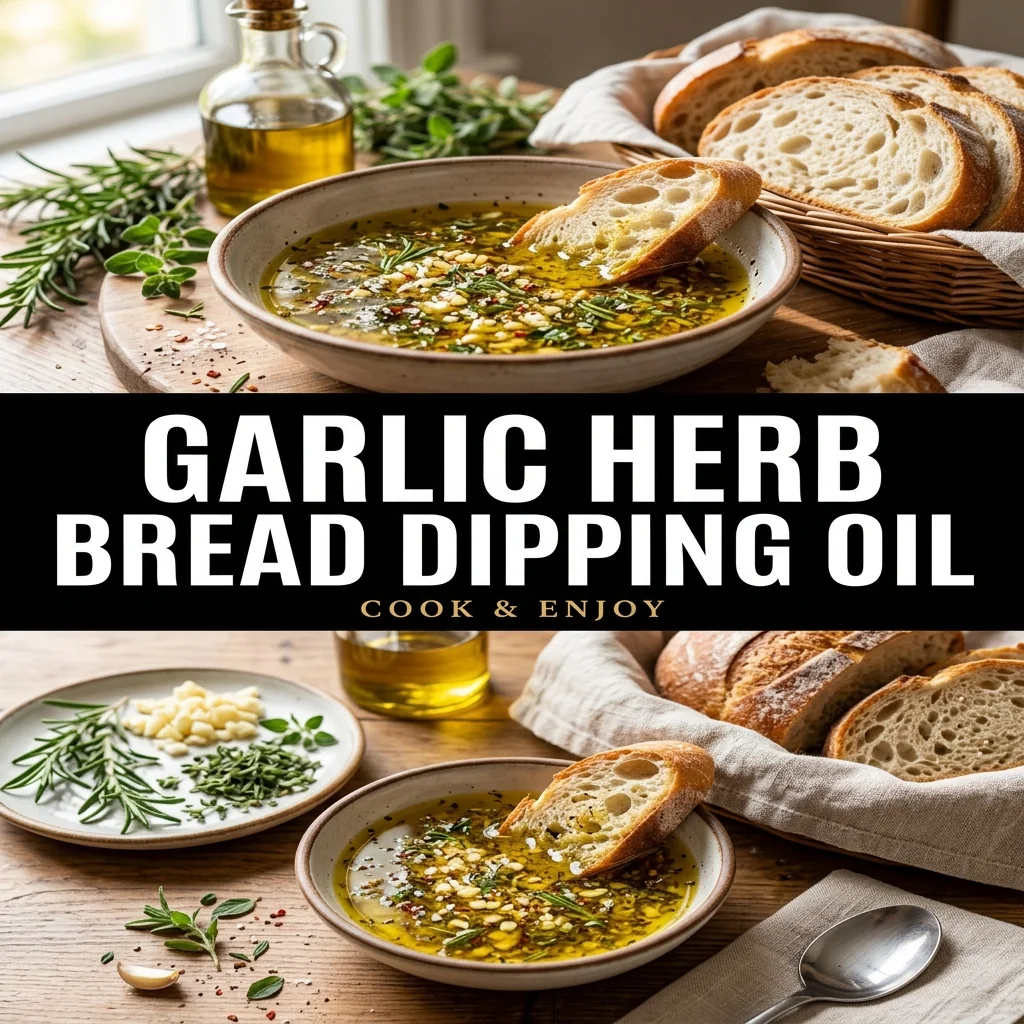
Garlic herb bread dipping oil transforms basic crusty loaves into a focal appetizer reminiscent of classic trattoria dining. The secret to an exceptional dipping oil lies in balancing pungent aromatics with rich, unctuous fats and tangy acid. Heating a portion of the garlic in extra-virgin olive oil softens its natural bite, releasing subtle sweetness that infuses deep into the oil base. Complementing this foundation with savory dried herbs like oregano, basil, and rosemary provides sustained herbal depth that fresh leaves cannot match, as dried herbs readily yield their essential oils to the fat. A sharp splash of aged balsamic vinegar cuts through the richness, while freshly grated Parmigiano-Reggiano adds a salty, savory finish that clings perfectly to crusty bread.
Selecting Olive Oil and Vinegar
The caliber of extra-virgin olive oil dictates the entire profile of this dip. Choose a cold-pressed, unrefined oil featuring grassy, peppery notes rather than a neutral blend. Because the oil remains largely uncooked, its raw characteristics stand at the forefront. Pair this foundation with a thick, syrupy aged balsamic vinegar of Modena. Cheaper, watery vinegars will disperse too rapidly and lend harsh acidity, whereas aged vinegar stays clustered in rich pools, creating a pleasant contrast of sweet tartness alongside the pungent garlic and rich oil with every bite.
Dried versus Fresh Seasonings
Dried herbs excel in oil infusions because their moisture content has been fully removed, preventing unwanted emulsion and sogginess. Oregano, rosemary, and thyme contain robust resins that dissolve readily into room-temperature lipids over time. Crushing the dried rosemary between your fingers before adding it ensures the needles release their fragrance without presenting tough textures. Fresh flat-leaf parsley is reserved strictly as a finishing garnish, contributing a clean color contrast and a crisp, peppery top note that brightens the deeper, earthy tones of the dried botanical blend.
Ideal Bread Pairings
To fully appreciate this infused oil, pair it with artisan breads boasting open, airy crumb structures and sturdy, chewy crusts. A traditional rustic sourdough, Italian ciabatta, or French baguette provides deep pockets that capture the pooled balsamic vinegar, grated cheese, and crushed herbs in each dip. Slice the bread into thick wedges or tear it by hand for maximum textured surface area. Warm the bread in an oven preheated to 350 F (175 C) for five minutes before serving so the heat slightly warms the oil on contact.
Before you start
Gentle temperature control is essential when warming the minced garlic. Olive oil carries heat rapidly, and minced garlic turns bitter the instant it browns. Maintain the lowest flame on your cooktop and stir continuously for the full four minutes. If you notice any browning along the edges of the pan, remove it from the heat source immediately to preserve the sweet, savory aromatics.
THE RECIPE
Garlic Herb Bread Dipping Oil
6 servings · 10 minutes preparation · 5 minutes cooking · 15 minutes cooling, chilling or resting
Ingredients
Step-by-step instructions
- Combine the minced garlic and two tablespoons of the extra-virgin olive oil in a small heavy saucepan placed over low heat.
- Warm the garlic mixture for four to five minutes, stirring constantly, until aromatic and softened without letting the garlic brown or scorch.
- Remove the saucepan from the heat immediately and pour the warm garlic and oil mixture into a shallow wide ceramic serving bowl.
- Pour the remaining ten tablespoons of unheated extra-virgin olive oil into the serving bowl, stirring gently to combine the oils evenly.
- Whisk in the dried oregano, dried basil, crushed rosemary, dried thyme, crushed red pepper flakes, kosher salt, and freshly ground black pepper until thoroughly distributed.
- Drizzle the aged balsamic vinegar across the center of the seasoned oil mixture so it creates dark concentrated pools within the dish.
- Scatter the finely grated Parmigiano-Reggiano cheese and chopped fresh flat-leaf parsley across the surface, then let the oil rest for fifteen minutes before serving.
Kitchen notes
Gentle temperature control is essential when warming the minced garlic. Olive oil carries heat rapidly, and minced garlic turns bitter the instant it browns. Maintain the lowest flame on your cooktop and stir continuously for the full four minutes. If you notice any browning along the edges of the pan, remove it from the heat source immediately to preserve the sweet, savory aromatics.
Storage & make-ahead
Refrigerate leftover garlic-herb oil immediately after preparation in a sealed container at 40°F (4°C) or below and use within 3 days. Do not store this fresh-garlic mixture at room temperature; a brief warming step and the added balsamic vinegar do not make it shelf stable. Remove only the portion needed for serving and discard any portion left out more than 2 hours, or 1 hour above 90°F (32°C).
An original recipe guide inspired by themes in our Pinterest research. Recipe has not been independently kitchen-tested. AI-generated image is illustrative; your finished dish may look different.
Frequently asked questions
Can I use fresh garlic without warming it in oil?
Raw garlic can taste overly harsh and bitter when left uncooked. Warming it briefly in oil tempers its aggressive bite into mellow sweetness, improving both texture and overall balance without cooking off delicate floral notes in the oil.
Why did my dipping oil turn cloudy in the refrigerator?
Extra-virgin olive oil contains natural chemical compounds and monounsaturated fatty acids that solidify at cold temperatures. This cloudiness is completely normal and resolves once the container sits at room temperature for fifteen to twenty minutes.
Can I omit the cheese to make this dairy-free?
Yes, omit the Parmigiano-Reggiano or substitute it with nutritional yeast. Add an additional pinch of kosher salt to compensate for the lost salinity, ensuring the savory herb balance remains intact throughout the dish.