WHY MAKE IT
A little comfort, a lot of flavor.
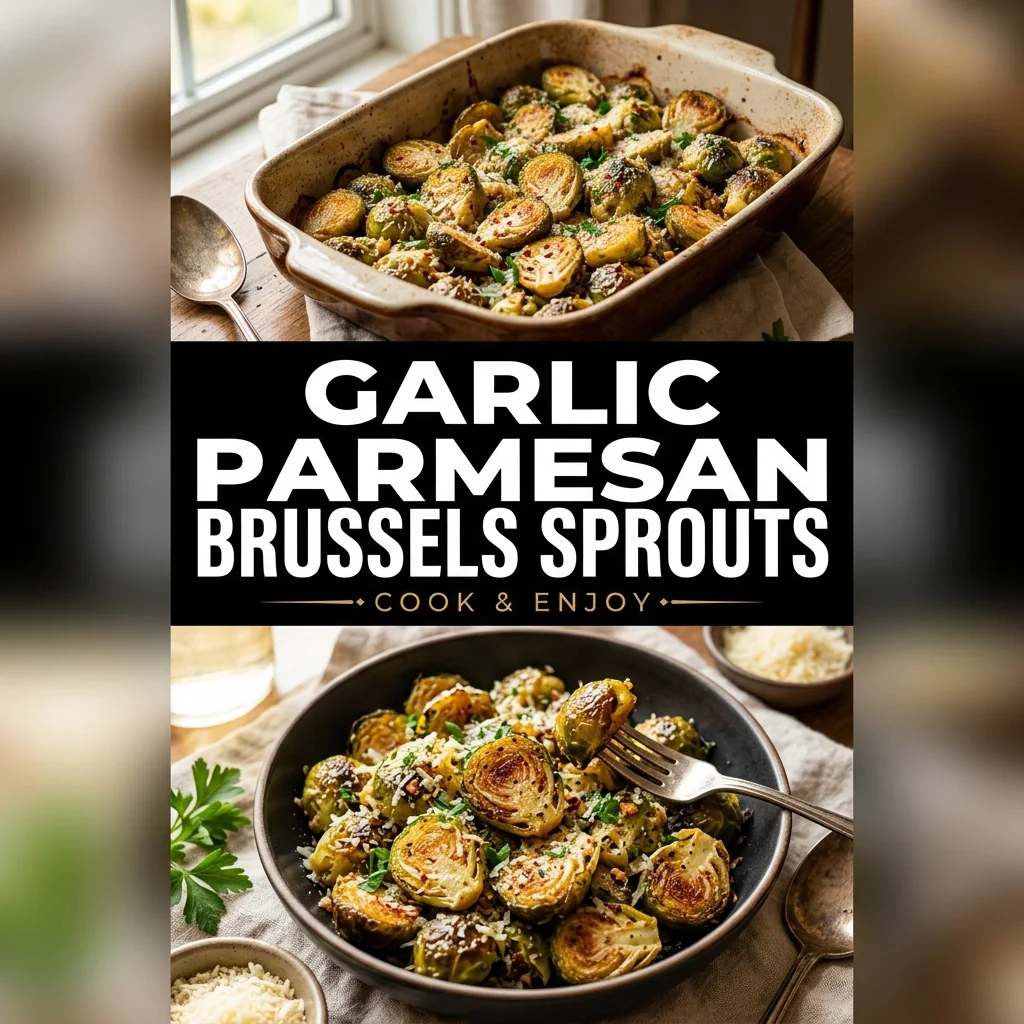
Garlic Parmesan Brussels sprouts transform a humble winter vegetable into an aromatic side dish featuring deep caramelization and robust savory notes. The high heat of a 425°F oven draws out the natural sweetness trapped within dense brassica leaves, eliminating the sharp, sulfurous qualities often associated with overcooked boiled sprouts. Adding the minced garlic toward the tail end of roasting preserves its pungency while preventing the delicate allicin compounds from burning against the hot pan surface. A blanket of finely grated Parmigiano-Reggiano melts over the blistered surfaces, providing rich umami that complements the vegetable's earthiness, while fresh lemon juice cuts through the fat to brighten the finish.
Selecting and Preparing Sprouts
Choose compact, firm Brussels sprouts that feel dense when squeezed and show vibrant green coloring with tightly packed leaves. Avoid heads with yellowing foliage or dark circular spotting, which indicate age and moisture decay. Select sprouts of uniform size so they cook at an identical rate across the baking pan. Halving them through the core keeps the inner leaf structures intact during high-heat roasting. Discard loose exterior leaves that fall away during trimming, or roast them on the side during the final five minutes as ultra-crisp vegetable chips.
Managing Heat and Browning
High conductive heat is vital for roasting brassicas successfully. By preheating the heavy metal sheet pan before introducing the seasoned sprouts, you establish immediate contact searing that caramelizes the flat cut sides before the interior overcooks. Placing them cut-side down maximizes direct heat transfer. If the oven temperature is too low, the interior turns soft and mushy before the exterior achieves the requisite Maillard reaction. Resist the temptation to flip the vegetables mid-cook; leaving them undisturbed creates the deepest brown crust.
The Cheese and Garlic Balance
Garlic burns quickly at 425°F, becoming acrid and bitter if exposed to prolonged baking. Introducing the minced garlic during the final three to four minutes of cooking allows the residual pan heat and oil to cook out the raw bite while keeping the aromatic oils sweet. Finely microplaned Parmigiano-Reggiano clings to the irregular blistered surfaces much better than coarse pre-shredded cheese, which often contains anti-caking starches that impede smooth melting. Fresh lemon zest provides an essential aromatic lift right at the finish.
Before you start
Moisture is the primary obstacle to achieving deep caramelization on roasted brassicas. Wash your sprouts several hours ahead of time or dry each halved piece meticulously using clean lint-free kitchen towels. If crowded into a smaller pan, the vegetables release steam into each other rather than roasting dry, yielding a soggy interior. Always roast them flat cut-side down on a hot baking sheet so the natural sugars brown against the heated steel.
THE RECIPE
Garlic Parmesan Brussels Sprouts
4 servings · 15 minutes preparation · 25 minutes cooking · 5 minutes cooling, chilling or resting
Ingredients
Step-by-step instructions
- Adjust an oven rack to the lower-middle position and preheat the oven to 425°F (218°C). Place an unlined 18x13-inch rimmed half-sheet baking pan inside the oven while it preheats to ensure the metal absorbs sufficient heat for instant searing.
- Trim the stem ends of the Brussels sprouts, strip away any discolored outer leaves, and slice each head in half from top to stem. Ensure the sprouts are thoroughly dry before proceeding, as excess surface moisture hinders crisping.
- Transfer the prepared sprouts to a large mixing bowl, drizzle with extra-virgin olive oil, and toss thoroughly. Add the kosher salt, black pepper, and crushed red pepper flakes, tossing again until the seasonings evenly coat every cut surface and leaf layer.
- Carefully pull the preheated baking sheet from the oven using dry oven mitts. Immediately arrange the seasoned Brussels sprouts cut-side down in a single layer across the hot metal, leaving ample space between pieces to prevent trapped steam from softening the edges.
- Return the sheet pan to the oven and roast undisturbed for 18 to 20 minutes at 425°F (218°C). Look for the cut undersides to turn deep golden brown and the exterior leaves to take on dark, brittle, charred edges.
- Stir the minced garlic with the remaining one tablespoon of olive oil in a small cup. Scatter the garlic mixture and half of the grated Parmigiano-Reggiano over the hot sprouts, then return the pan to the oven for 3 to 4 minutes until the garlic softens without browning bitter.
- Remove the baking pan from the oven and transfer the roasted sprouts to a warm serving platter. Immediately drizzle with fresh lemon juice, scatter the remaining grated Parmigiano-Reggiano over the top, finish with lemon zest, and rest for 5 minutes before serving warm.
Kitchen notes
Moisture is the primary obstacle to achieving deep caramelization on roasted brassicas. Wash your sprouts several hours ahead of time or dry each halved piece meticulously using clean lint-free kitchen towels. If crowded into a smaller pan, the vegetables release steam into each other rather than roasting dry, yielding a soggy interior. Always roast them flat cut-side down on a hot baking sheet so the natural sugars brown against the heated steel.
Storage & make-ahead
Store cooled leftovers in a shallow, airtight glass container in the refrigerator for up to 4 days. To reheat, spread the sprouts onto a baking sheet and heat in a 400°F (204°C) oven or toaster oven for 6 to 8 minutes until sizzling and recrisped. Avoid microwaving, which renders the leaves soft and rubbery. Refrigerate perishable leftovers within 2 hours (within 1 hour above 90°F/32°C), using shallow containers. If reheating, heat throughout to 165°F (74°C).
An original recipe guide inspired by themes in our Pinterest research. Recipe has not been independently kitchen-tested. AI-generated image is illustrative; your finished dish may look different.
Frequently asked questions
Can I use frozen Brussels sprouts for this recipe?
Frozen sprouts contain excessive internal ice and water, which causes them to steam rather than roast. They will turn soft and watery rather than developing crisp, charred edges. Fresh sprouts are required to achieve the intended caramelized texture and distinct crunch.
Why did my garlic turn bitter during roasting?
Garlic turns bitter when scorched by high heat. Mince the garlic finely and coat it lightly with olive oil before adding it during the final 3 to 4 minutes of baking. Adding it at the start exposes delicate solids to excessive dry heat.
Can I substitute pre-grated Parmesan from a tub?
Pre-grated cheeses contain cellulose and starch coatings that prevent them from melting cleanly onto the vegetables. Use a wedge of authentic Parmigiano-Reggiano or Grana Padano and grate it finely using a microplane for silky melting and superior savory depth.