WHY MAKE IT
A little comfort, a lot of flavor.
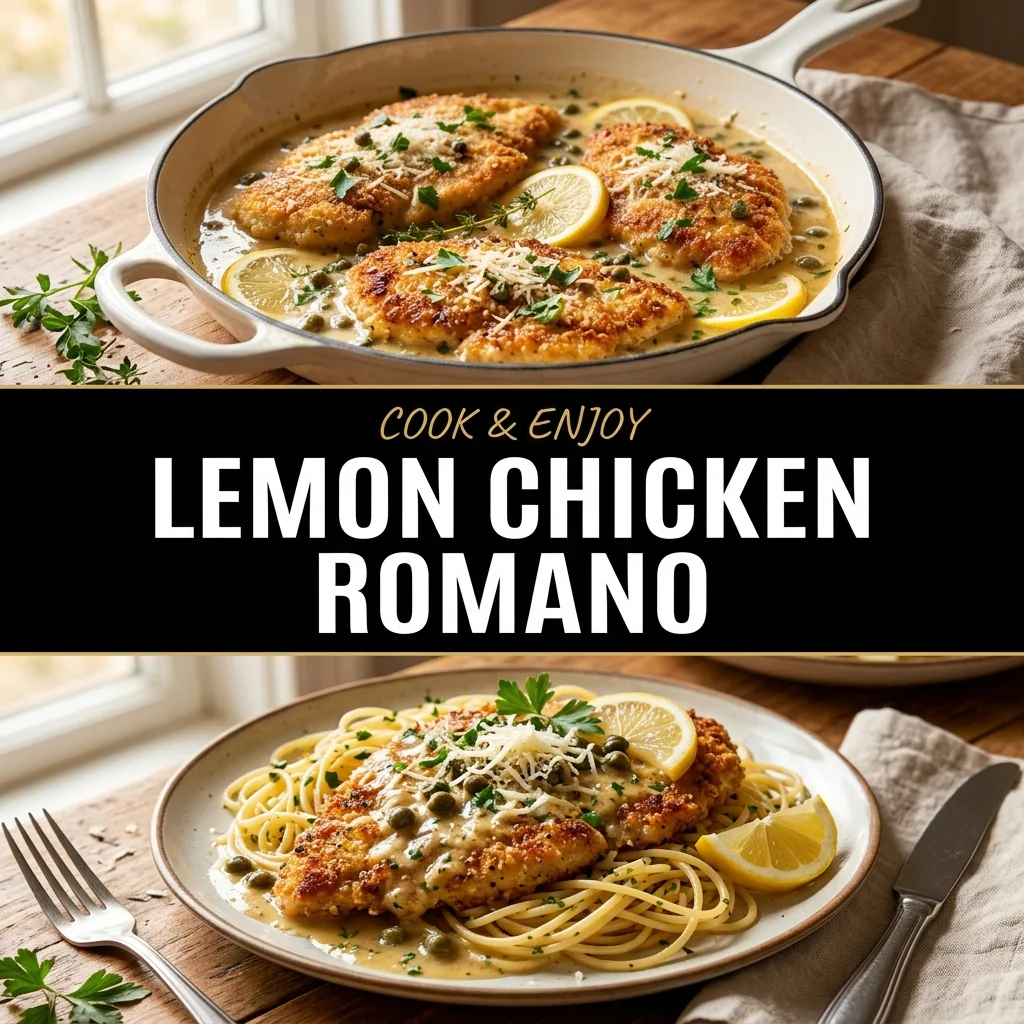
Lemon Chicken Romano transforms lean cutlets into a crisp, savory centerpiece through a classic Italian-American egg and cheese batter. Unlike standard breadcrumb coatings, dipping flour-dusted chicken into whisked eggs mixed directly with grated Pecorino Romano yields a uniquely delicate, lace-like crust that crisps quickly upon contact with hot fat. The sharp, sheep's-milk tang of the Pecorino caramelizes in the pan, creating a deeply savory shell around the tender white meat. Deglazing the pan with dry wine, briny capers, and fresh lemon juice introduces an acidic counterweight that cuts through the rich batter. Ready in under forty minutes, this dish delivers restaurant-caliber technique suited for weeknight dinner tables.
The Role of Pecorino Romano
Pecorino Romano is a hard, salted sheep's-milk cheese with a distinctively sharp, punchy profile that behaves differently than cow's-milk alternatives. Grated on a microplane or the smallest holes of a box grater, it suspends evenly within beaten eggs to form a cohesive batter. When pan-fried, the proteins in the Pecorino brown rapidly, imparting umami depth and a pleasant snap to the crust. While Parmigiano-Reggiano can be substituted if necessary, Pecorino offers a salty pungency that stands up exceptionally well against the assertive lemon and white wine reduction built later in the pan.
Pan Temperature and Coating Control
Managing skillet temperature is paramount when working with cheese-laden batters. If the oil is too cool, the egg and cheese soak up grease and become limp; if the oil is excessively hot, the cheese scorches black before the meat cooks through. Target a steady medium flame where the oil shimmers and drops of batter sizzle immediately. Fry cutlets in batches if your pan is smaller than 12 inches across. Crowding drops pan temperature abruptly, trapping steam and softening the delicate golden cheese crust you worked to develop.
Finishing the Pan Sauce
The brightness of this dish relies on finishing the pan sauce with cold butter, a technique known culinarily as monter au beurre. After reducing the white wine, chicken stock, and lemon juice to concentrate their flavors, lower the flame and vigorously whisk in chilled cubes of butter. The cold butter slowly emulsifies with the acidic liquid, transforming watery pan juices into an opaque, glossy sauce that clings neatly to the cutlets. Add capers at the very end to preserve their firm texture and briny pop.
Before you start
For the crust to adhere properly without sliding off into the pan, make sure your cutlets are patted dry before hitting the flour. Shake off almost all excess flour; leaving heavy pockets of dry starch creates a barrier that causes the cheese-and-egg coating to slip away during frying. Keep your pan oil hot enough to set the batter instantly upon contact.
THE RECIPE
Lemon Chicken Romano
4 servings · 20 minutes preparation · 15 minutes cooking · 5 minutes cooling, chilling or resting
Ingredients
Step-by-step instructions
- Slice the chicken breasts horizontally in half to create 4 even cutlets. Place them between sheets of plastic wrap and pound gently to a uniform 1/4-inch thickness, then season lightly with 1/2 teaspoon kosher salt and 1/4 teaspoon pepper.
- Set up a breading station with two shallow bowls. In the first bowl, whisk the all-purpose flour with 1/4 teaspoon kosher salt. In the second bowl, beat the eggs thoroughly with the finely grated Pecorino Romano until a loose paste forms.
- Heat the olive oil and 1 tablespoon of unsalted butter in a wide 12-inch stainless steel skillet over medium heat until the fat is foaming and hot.
- Dredge each cutlet lightly in flour, shaking off excess, then dip into the egg and Pecorino mixture, allowing the cheese batter to cling evenly to both sides.
- Lay the coated cutlets into the hot skillet in an uncrowded single layer. Fry undisturbed for 3 to 4 minutes until the bottom crust turns deep golden brown, then flip and fry for an additional 2 to 3 minutes until firm and golden.
- Transfer the cooked cutlets to a warm plate. Carefully pour off any excess scorched fat from the skillet, leaving only a thin film of oil.
- Return the skillet to medium-high heat and pour in the dry white wine, scraping up any browned bits from the pan floor. Simmer for 2 minutes until reduced by half.
- Add the chicken broth, lemon juice, and capers, bringing the mixture to a boil. Swirl in the remaining 2 tablespoons of cold unsalted butter until melted into a velvety sauce, then verify the chicken has reached an internal temperature of 165°F (74°C).
- Spoon the hot pan sauce around the cutlets, garnish with lemon wheels and chopped parsley, and let stand 3 minutes before serving immediately.
Kitchen notes
For the crust to adhere properly without sliding off into the pan, make sure your cutlets are patted dry before hitting the flour. Shake off almost all excess flour; leaving heavy pockets of dry starch creates a barrier that causes the cheese-and-egg coating to slip away during frying. Keep your pan oil hot enough to set the batter instantly upon contact.
Storage & make-ahead
Store leftovers in a shallow airtight container in the refrigerator for up to 3 days. To reheat while reviving the cheese crust, arrange cutlets on a wire rack set inside a rimmed baking sheet and warm in a 350°F (175°C) oven until hot and an internal thermometer reaches 165°F (74°C). Microwave reheating will soften the crust. Refrigerate perishable leftovers within 2 hours (within 1 hour above 90°F/32°C), using shallow containers. If reheating, heat throughout to 165°F (74°C).
An original recipe guide inspired by themes in our Pinterest research. Recipe has not been independently kitchen-tested. AI-generated image is illustrative; your finished dish may look different.
Frequently asked questions
Can I use bottled lemon juice for the sauce?
Bottled lemon juice lacks the volatile aromatic oils found in fresh fruit and often carries a dull, metallic aftertaste. For a balanced sauce that highlights the cheese crust, always squeeze fresh lemons right before building your reduction.
What is the best white wine to use?
Select a dry, un-oaked white wine with crisp acidity, such as Pinot Grigio, Sauvignon Blanc, or an un-oaked Chardonnay. Avoid sweet dessert wines or heavily oaked whites, which can become unpleasantly cloying and bitter when reduced in a savory pan sauce.
How do I keep the cheese from sticking to the skillet?
Ensure your skillet is thoroughly preheated before adding the oil and butter, and let the fat shimmer before placing the chicken down. Leave the cutlet undisturbed for the first 3 minutes; the cheese crust naturally releases from the metal once properly browned.