WHY MAKE IT
A little comfort, a lot of flavor.
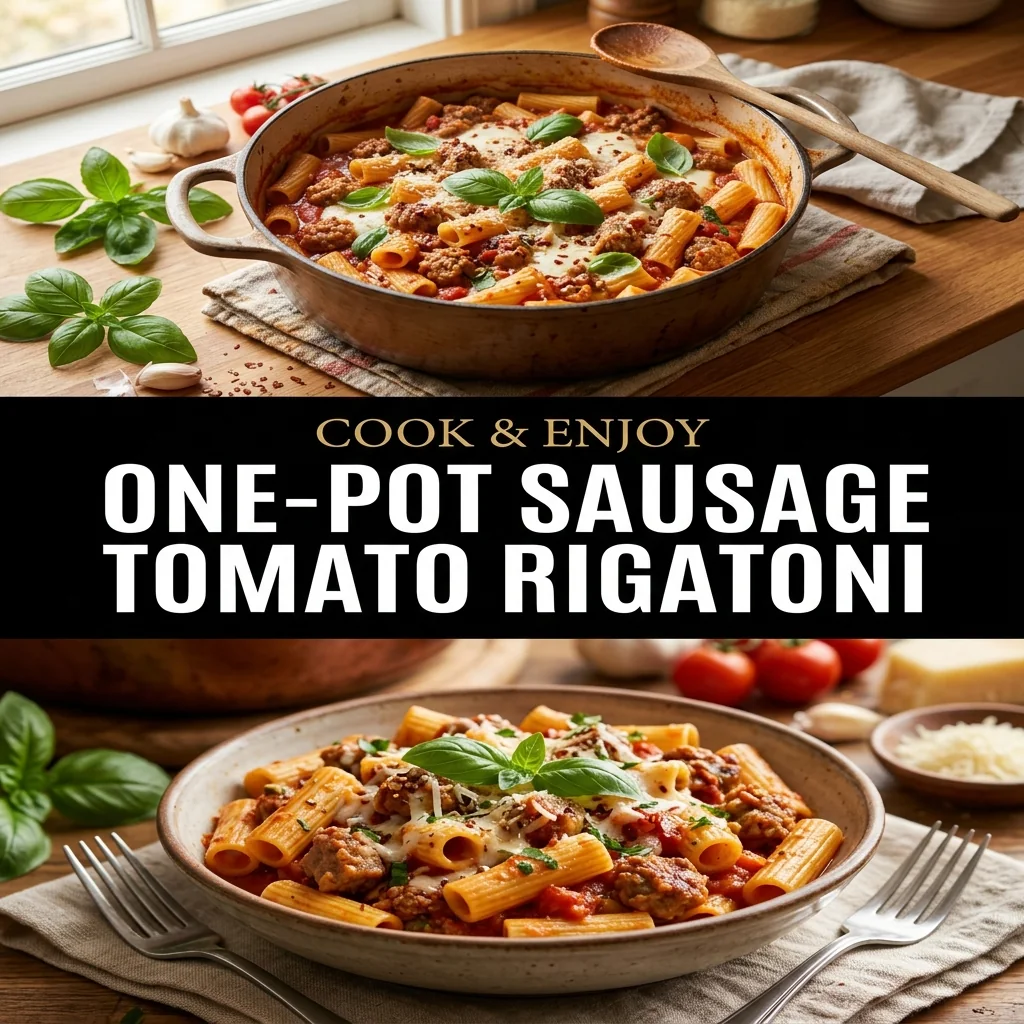
One-pot pasta methods transform standard cooking mechanics by turning starch from a byproduct into an asset. Instead of boiling rigatoni in gallons of water and draining that valuable starch down the sink, the pasta cooks directly in an aromatic mixture of crushed tomatoes, chicken broth, and rendered Italian sausage fat. As the tubular rigatoni simmers, it releases starches directly into the liquid, concentrating into a rich, full-bodied tomato sauce that clings tenaciously to both the exterior ridges and hollow interior of every noodle. Browning sweet Italian sausage first lays down savory fond on the base of the Dutch oven, while melted mozzarella and sharp Parmesan create strings of creamy richness throughout every hearty serving.
Selecting Sausage and Building Fond
Bulk Italian sausage containing a balance of fennel, garlic, and red pepper provides foundational flavor without requiring dozens of dry spice additions. Searing the sausage until deeply caramelized creates fond—the layer of browned meat sugars and proteins adhering to the pan. Sweating the onions directly in the sausage drippings lifts and distributes these savory compounds. Deglazing the pot thoroughly with chicken broth before adding the pasta guarantees a rich, savory foundation that prevents any burned spots during simmering.
Liquid Ratios in One-Pot Cooking
Cooking pasta directly in its sauce requires careful liquid management. If there is too much liquid, the sauce ends up soupy; too little, and the rigatoni remains hard while the tomato solids scorch against the bottom. A ratio of 3.5 cups of broth and one 28-ounce can of crushed tomatoes provides the exact volume required to hydrate 12 ounces of thick-walled rigatoni. The starch expelled during the simmer naturally emulsifies the acidic tomato juices and rendered fats into a glossy glaze.
The Rigatoni Advantage
Rigatoni is ideally suited for one-pot meat sauces. Its wide diameter allows flavorful sauce and small bits of ground sausage to tuck directly into the pasta tubes, while the outer ridges give melted mozzarella purchase. Unlike delicate shapes that easily tear under frequent stirring, rigatoni maintains structural integrity throughout the 15-minute simmer. A final five-minute covered rest off heat lets the starches settle and allows the mozzarella to melt into an unctuous cheese blanket.
Before you start
Resist the urge to boil the pot uncovered during the main cooking stage. Trapping steam beneath a tight lid ensures the rigatoni absorbs the liquid evenly while the rich starches released by the pasta stay within the sauce. Stir thoroughly once at the five-minute mark and again at the ten-minute mark to ensure no rigatoni tubes settle against the bottom surface of the Dutch oven and stick.
THE RECIPE
One-Pot Sausage Tomato Rigatoni
6 servings · 15 minutes preparation · 30 minutes cooking · 5 minutes cooling, chilling or resting
Ingredients
Step-by-step instructions
- Heat 1 tablespoon extra-virgin olive oil in a 5-to-6-quart enameled Dutch oven over medium-high heat, add 1 pound Italian sausage, and brown for 6 minutes, breaking it into bite-sized crumbles with a wooden spoon until browned; confirm pork sausage reaches 160°F (71°C), or poultry sausage 165°F (74°C), by the end of cooking.
- Add the diced yellow onion to the sausage drippings and cook over medium heat for 4 minutes until softened, then add 4 minced cloves garlic and cook for 1 minute until fragrant.
- Stir in 1 teaspoon dried oregano, 1 teaspoon dried basil, 0.5 teaspoon crushed red pepper flakes, 1 teaspoon kosher salt, and 0.5 teaspoon black pepper, toasting the spices in the hot fat for 30 seconds.
- Pour in 28 ounces crushed tomatoes and 3.5 cups low-sodium chicken broth, scraping the bottom of the Dutch oven with a wooden spatula to dissolve any browned bits.
- Add 12 ounces dry rigatoni, pressing the pasta down into the liquid so the tubes are completely submerged beneath the sauce.
- Bring to a rapid boil over medium-high heat, then reduce flame to medium-low, cover with a tight-fitting lid, and simmer for 13 to 15 minutes, stirring twice during cooking to prevent pasta from sticking to the bottom.
- Uncover the pot, verify the rigatoni is tender al dente and sauce is thick, stir in 0.5 cup grated Parmesan, scatter 1 cup shredded mozzarella across the top, cover for 2 minutes until melted, rest 5 minutes, and garnish with chopped parsley before serving.
Kitchen notes
Resist the urge to boil the pot uncovered during the main cooking stage. Trapping steam beneath a tight lid ensures the rigatoni absorbs the liquid evenly while the rich starches released by the pasta stay within the sauce. Stir thoroughly once at the five-minute mark and again at the ten-minute mark to ensure no rigatoni tubes settle against the bottom surface of the Dutch oven and stick.
Storage & make-ahead
Promptly refrigerate leftovers in a sealed container within 2 hours of serving. The pasta will keep safely in the refrigerator for up to 3 to 4 days. Because one-pot pasta continues to absorb sauce as it cools, reheat individual portions in a saucepan with 2 to 3 tablespoons of chicken broth or water over medium-low heat, stirring until steaming hot and reaching 165°F (74°C).
An original recipe guide inspired by themes in our Pinterest research. Recipe has not been independently kitchen-tested. AI-generated image is illustrative; your finished dish may look different.
Frequently asked questions
Can I use hot Italian sausage instead of mild?
Yes. Hot Italian sausage works wonderfully if you enjoy a pronounced spicy kick. If using spicy sausage, consider omitting or cutting the added crushed red pepper flakes in half to keep the heat balanced and palatable for everyone.
Why did my pasta stick to the bottom of the pot?
Pasta tends to sink and settle on the bottom where heat is most concentrated. Ensure your heat is set to medium-low, use a heavy-bottomed Dutch oven for even heat dispersion, and stir thoroughly twice during the simmer to keep the tubes moving.
Can I substitute gluten-free rigatoni in this one-pot method?
Gluten-free pasta behaves differently and tends to shed excessive starch, turning gummy or disintegrating during a direct simmer. For best results with gluten-free pasta, boil it separately and fold it into the reduced sausage tomato sauce at the very end.