WHY MAKE IT
A little comfort, a lot of flavor.
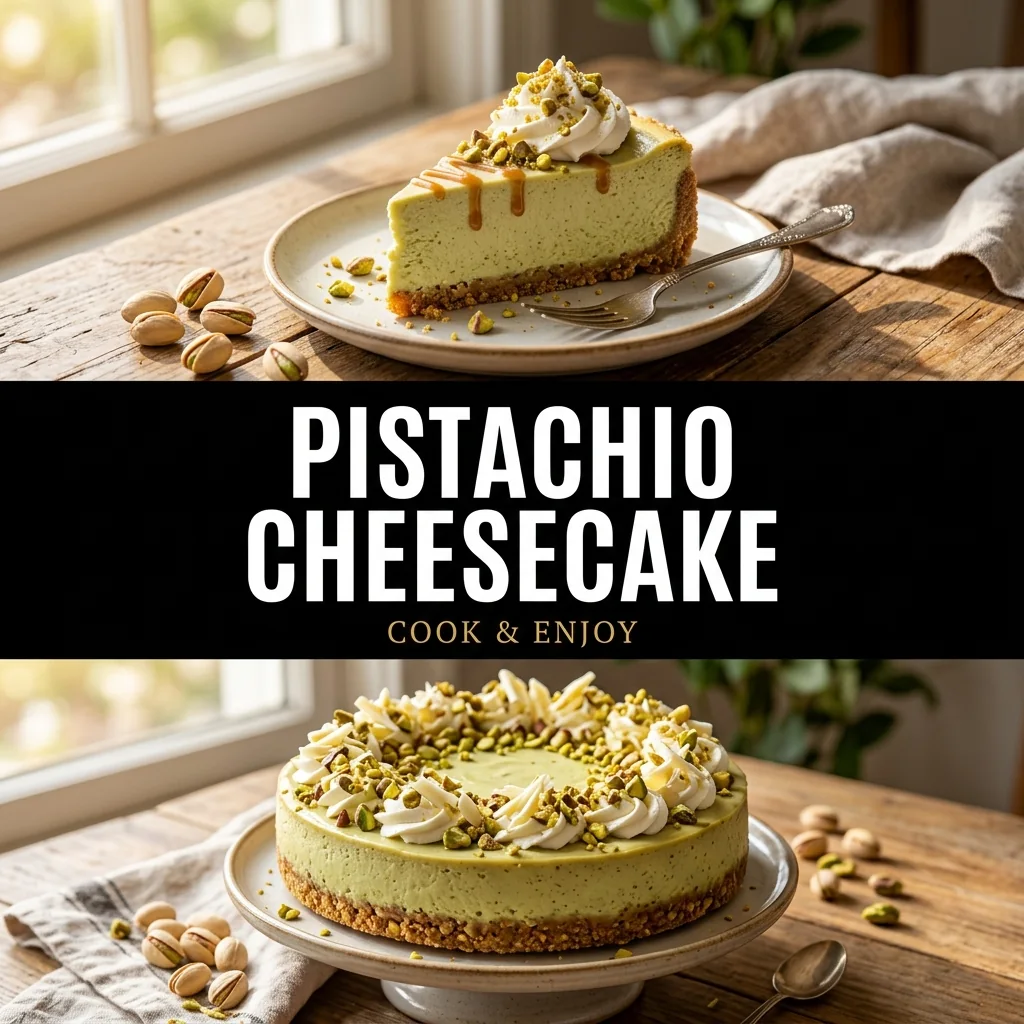
Pistachio cheesecake pairs the classic tang of a New York-style dessert with the earthy, aromatic depth of Mediterranean nuts. Achieving the best flavor relies on high-quality pistachio paste rather than artificial dessert syrups or almond extract masquerading as pistachio. The natural oils in the nut paste meld effortlessly with full-fat cream cheese and sour cream, yielding an ultra-silky crumb that balances fat and acidity cleanly. A gentle water bath maintains an even, moist baking temperature, minimizing the risk of cracks or sunken centers. Topped with crunchy toasted nuts to contrast the dense custard, this cheesecake offers an understated pale green hue and a sophisticated profile suitable for formal dinner gatherings.
Selecting Pistachio Paste
The flavor and natural tint of this cheesecake depend on using 100 percent pure pistachio paste. Commercial pastes intended for gelato or professional pastry work offer deep roasted notes and vibrant green pigments without artificial food colorings. Avoid sweetened pistachio dessert creams containing palm oil, whey, or excess sugar, as they alter the liquid balance and disrupt the setting of the eggs. If pure paste is unavailable, grind blanched raw pistachios in a high-powered food processor until completely smooth and buttery, stopping frequently to prevent overheating the nut oils.
Water Bath Mechanics
Baking delicate dairy custards requires gentle, indirect heat. A water bath insulates the perimeter of the 9-inch springform pan, preventing the outer edges of the cheesecake from overcooking and curdling before the center reaches proper temperature. Wrapping the pan exterior in overlapping layers of heavy-duty aluminum foil blocks water seepage, preserving the crisp integrity of the graham cracker crust. Adding simmering water rather than cold water to the roasting pan prevents drastic oven temperature drops, ensuring steady heat transfer and uniform expansion throughout the batter.
Controlled Cooling and Slicing
Sudden temperature drops cause cheesecakes to contract rapidly, creating fissures across the surface. Leaving the baked cheesecake inside the turned-off oven with the door propped open allows the structure to set gently over sixty minutes. Slicing requires a long, sharp chef's knife dipped into hot water and dried thoroughly with a clean towel between every individual cut. This warms the blade so it glides smoothly through the rich dairy fats, leaving sharp, pristine edges that display the creamy pale-green interior.
Before you start
Source pure pistachio paste made exclusively from ground pistachios without added oils, artificial coloring, or powdered sugar. If your paste has separated in the jar, stir it vigorously before measuring to ensure the natural fats and solids incorporate smoothly into the cheese base. Room temperature ingredients are essential; cold cream cheese generates small persistent curds that will not smooth out without overmixing, which introduces unwanted air into your cheesecake custard.
THE RECIPE
Pistachio Cheesecake
12 servings · 35 minutes preparation · 70 minutes cooking · 420 minutes cooling, chilling or resting
Ingredients
Step-by-step instructions
- Preheat the oven to 325°F (163°C). Stir together crushed graham crackers, melted butter, and two tablespoons of sugar in a bowl until evenly moistened. Press the mixture firmly across the bottom of an ungreased 9-inch (23 cm) springform pan, then bake for 10 minutes until lightly golden and set before cooling completely on a rack.
- Wrap the exterior base and outer walls of the cooled springform pan with three heavy-duty sheets of aluminum foil to seal against leaks. Place the prepared pan into a large, deep roasting pan that will serve as the water bath, ensuring the wrapped pan sits level and ready on your workspace.
- Beat room temperature cream cheese and one cup of sugar in a stand mixer fitted with the paddle attachment on low speed for 3 minutes until smooth. Scrape the sides and bottom of the bowl thoroughly to eliminate lumps before introducing any other liquid ingredients to maintain an even emulsion.
- Add the pure pistachio paste, sour cream, heavy cream, vanilla extract, and sea salt to the cream cheese mixture. Beat on low speed for 2 minutes until the green paste is fully blended, scraping down the bowl halfway through so the color and richness remain uniformly distributed throughout the batter.
- Incorporate the eggs one at a time on low speed, mixing just until each yolk and white disappear into the batter before adding the next. Avoid beating at high speeds to prevent whipping unwanted air pockets into the dense custard, which helps prevent surface fissures during the baking cycle.
- Pour the smooth batter over the cooled crust in the pan. Bring 2 quarts of water to a simmer and pour it carefully into the outer roasting pan until it reaches halfway up the side of the springform pan. Bake at 325°F (163°C) for 55 to 60 minutes.
- Check doneness by gently shaking the pan; the outer ring should be set while a 2-inch center circle retains a slight wobble. Turn off the oven, leave the oven door propped open by two inches with a wooden spoon, and cool undisturbed for 60 minutes before removing.
- Transfer the cheesecake from the water bath, strip away the foil, run a thin offset spatula around the edges, and refrigerate uncovered for 6 hours until thoroughly chilled and firm. Garnish the chilled surface evenly with chopped toasted pistachios just before releasing the springform ring and slicing.
Kitchen notes
Source pure pistachio paste made exclusively from ground pistachios without added oils, artificial coloring, or powdered sugar. If your paste has separated in the jar, stir it vigorously before measuring to ensure the natural fats and solids incorporate smoothly into the cheese base. Room temperature ingredients are essential; cold cream cheese generates small persistent curds that will not smooth out without overmixing, which introduces unwanted air into your cheesecake custard.
Storage & make-ahead
Store the chilled cheesecake tightly covered in the refrigerator for up to 5 days. For longer storage, freeze sliced portions on a parchment-lined baking sheet until solid, then wrap individually in plastic wrap and heavy foil for up to 2 months. Thaw frozen slices overnight in the refrigerator before serving; never thaw at room temperature to preserve texture.
An original recipe guide inspired by themes in our Pinterest research. Recipe has not been independently kitchen-tested. AI-generated image is illustrative; your finished dish may look different.
Frequently asked questions
Can I use whole roasted salted pistachios for the paste?
Avoid salted nuts because excess sodium disrupts the delicate sweet balance of the filling. Use raw, unsalted nuts lightly toasted in a dry pan if grinding your own paste, adjusting the recipe salt downward if lightly salted nuts are your only option.
Why is my pistachio cheesecake pale instead of bright green?
Natural pistachio paste produces an elegant, muted sage-green color rather than a vibrant neon shade. Avoid relying on artificial green food dyes unless you prefer that look; high-quality Sicilian or California pistachios naturally carry an understated, earthy green tone.
How do I know the cheesecake center is cooked through?
Gently nudge the side of the pan. The outer 2 to 3 inches should appear firm and matte, while the very center retains a slight, jelly-like wobble. An instant-read thermometer inserted into the center should read 150°F (65°C).