WHY MAKE IT
A little comfort, a lot of flavor.
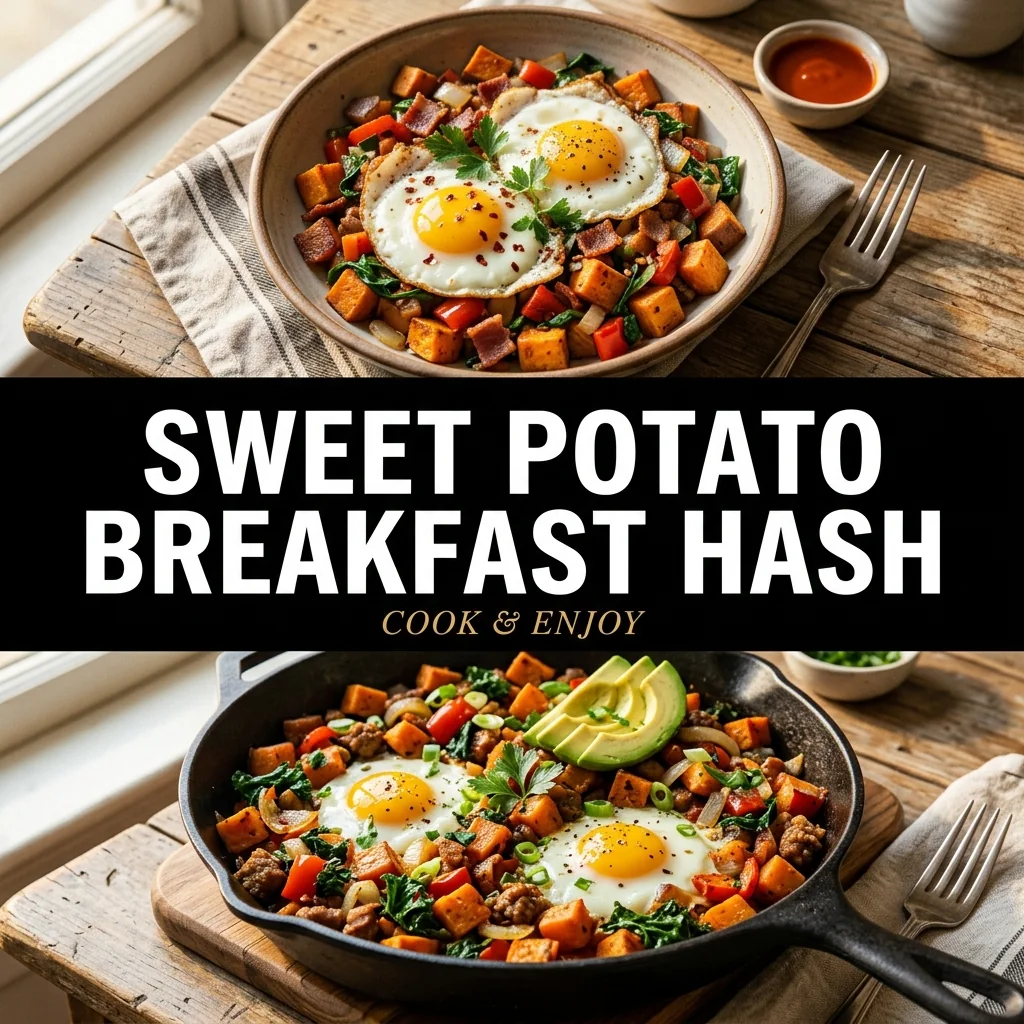
Sweet potato breakfast hash offers an earthy, nutrient-dense skillet meal centered on naturally sweet tubers, aromatic vegetables, and gentle spices. Cubing the sweet potatoes into uniform, bite-sized pieces allows them to cook through rapidly when initially covered, trapping steam to yield soft interiors. Removing the lid and raising the heat creates caramelized, crispy edges that provide texture against tender bell peppers and onions. Smoked paprika and cumin add depth that balances the natural sugars of the root vegetable. Finishing the dish by poaching eggs directly in hollowed wells within the skillet creates a complete breakfast in a single pan, where warm yolks create a rich sauce across the savory vegetables.
Two-Stage Skillet Cooking
Raw sweet potatoes take longer to soften than standard white potatoes due to their dense cellular structure. Covering the skillet during the first phase traps moisture, effectively par-steaming the cubes so they cook through to the center without burning. Uncovering the pan for the second phase allows surface moisture to evaporate quickly. Cooking over medium-high heat produces the sought-after Maillard reaction, forming crisp, browned crusts on the cubes. This method eliminates the need to boil the potatoes in a separate pot beforehand, saving preparation time and keeping all flavors concentrated inside one skillet.
Seasoning and Spices
Sweet potatoes require assertive savory elements to counterbalance their natural sweetness. Ground cumin provides an earthy foundation, while smoked paprika introduces campfire warmth and a deep red hue that coats every vegetable cube. Adding minced garlic only during the final minute of sautéing protects its delicate sugars from scorching against the hot cast iron. Seasoning in stages—salting the potatoes early to draw out moisture and seasoning the aromatics later—ensures thorough sodium penetration and well-rounded flavor throughout every component of the skillet.
Cooking Eggs to Doneness
Make four shallow wells so each egg sits close to the hot skillet. Cover over medium-low heat and cook until both whites and yolks are firm, checking for 160°F (71°C). The lid helps the tops set while the vegetables underneath remain hot. Lower the burner if the potatoes brown too quickly. Timing varies with the skillet, lid and egg size; the appearance and measured temperature matter more than the clock. Serve promptly once the eggs are cooked.
Before you start
Uniformity is key when cutting sweet potatoes; keeping the cubes strictly to 1/2-inch ensures they steam through quickly under the lid before searing without scorching. Using a well-seasoned cast-iron skillet provides superior heat retention, which helps develop the desired caramelized exterior on the vegetables. If you prefer fully firm egg yolks, simply extend the covered cooking stage by an extra 2 to 3 minutes.
THE RECIPE
Sweet Potato Breakfast Hash
4 servings · 20 minutes preparation · 27 minutes cooking · 5 minutes cooling, chilling or resting
Ingredients
Step-by-step instructions
- Heat 1 tablespoon of olive oil in a large 12-inch cast-iron skillet over medium heat until shimmering.
- Add the diced sweet potatoes and 1/4 teaspoon of salt, spreading them into an even single layer to maximize direct pan contact.
- Cover the skillet with a lid and cook for 8 minutes, stirring once halfway through, until the sweet potatoes are tender when pierced with a fork.
- Remove the lid, push the potatoes to one side, add the remaining 1 tablespoon of olive oil, and add the diced onion, bell pepper, smoked paprika, cumin, remaining salt, and black pepper.
- Sauté the mixture together over medium-high heat for 7 minutes, stirring occasionally, until vegetables are lightly charred and potato edges are crisp.
- Stir in minced garlic for 1 minute, then create 4 shallow wells in the hash and crack 1 large egg directly into each well.
- Cover the skillet, reduce heat to medium-low, and cook for 6 to 8 minutes, or as long as needed until both whites and yolks are firm and the center reaches 160°F (71°C), then rest 5 minutes off heat and garnish with parsley.
Kitchen notes
Uniformity is key when cutting sweet potatoes; keeping the cubes strictly to 1/2-inch ensures they steam through quickly under the lid before searing without scorching. Using a well-seasoned cast-iron skillet provides superior heat retention, which helps develop the desired caramelized exterior on the vegetables. If you prefer fully firm egg yolks, simply extend the covered cooking stage by an extra 2 to 3 minutes.
Storage & make-ahead
Refrigerate leftover hash in an airtight container within 2 hours. Keep for up to 3 days. Reheat skillet leftovers thoroughly on the stovetop over medium heat or in a 350°F (175°C) oven until the internal temperature reaches 165°F (74°C).
An original recipe guide inspired by themes in our Pinterest research. Recipe has not been independently kitchen-tested. AI-generated image is illustrative; your finished dish may look different.
Frequently asked questions
Can I prepare the sweet potatoes in advance?
Yes, you can peel and dice the sweet potatoes up to 24 hours in advance. Store them submerged in cold water in the refrigerator to prevent drying, and pat them thoroughly dry with paper towels before frying.
What if my sweet potatoes are sticking to the skillet?
Sticking indicates either an unseasoned pan, insufficient oil, or moving the potatoes too soon. Allow the potatoes to sit undisturbed for the first few minutes; they will naturally release from the surface once a browned crust develops.
Can I add breakfast meats to this hash?
Yes, crumbled breakfast sausage, diced bacon, or chorizo pair exceptionally well. Cook meat first in the skillet, remove it with a slotted spoon, and cook the vegetables directly in the remaining rendered fat for maximum flavor.