WHY MAKE IT
A little comfort, a lot of flavor.
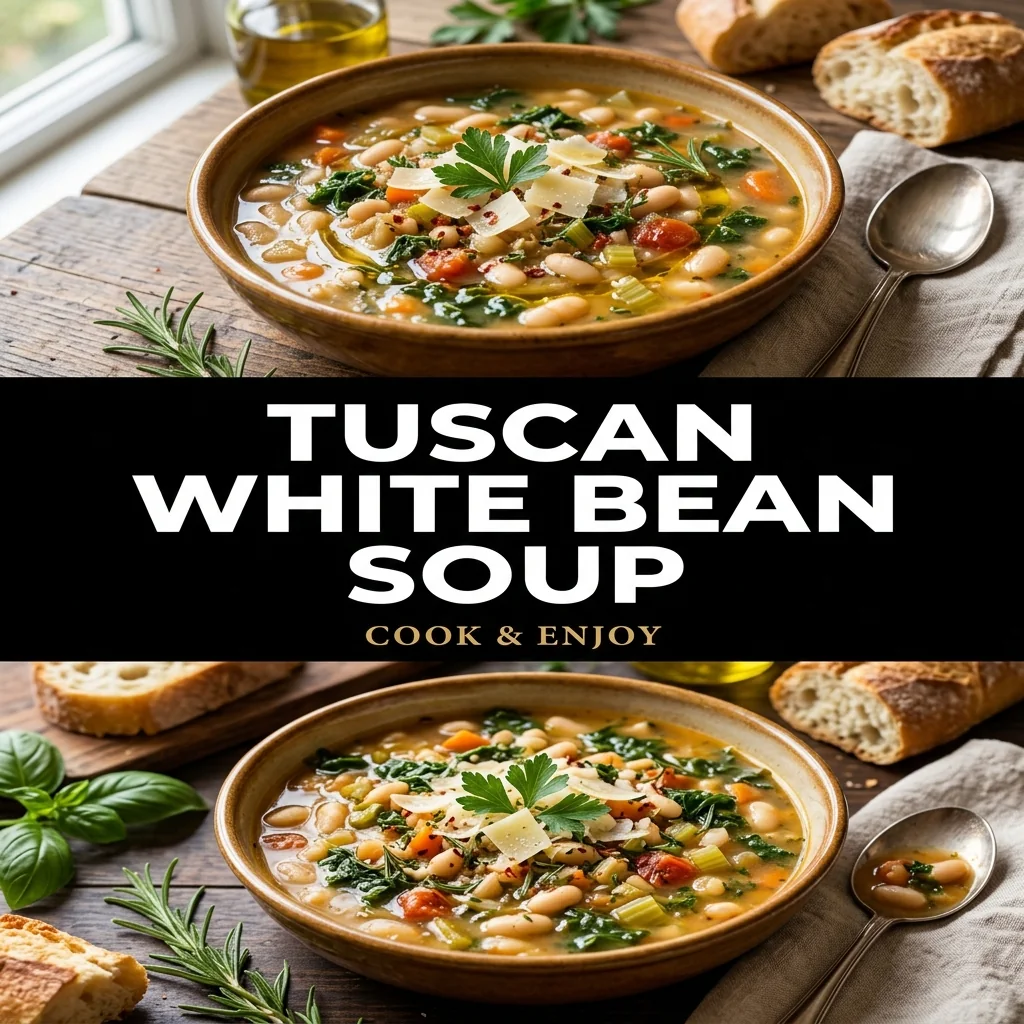
Tuscan White Bean Soup represents the soul of Italian cucina povera—resourceful, vegetable-forward country cooking that yields extraordinary comfort from humble pantry ingredients. Creamy cannellini beans provide satisfying protein and body, while lacinato kale (also known as cavolo nero) brings earthy color, structure, and pleasant chew. Simmering a savory Parmigiano-Reggiano rind directly in the broth infuses rich glutamates throughout the pot, creating deep savory undertones that mimic slow-simmered meat broths. A touch of concentrated tomato paste browned alongside fresh piney rosemary creates an aromatic base that warms from the inside out. Finished with peppery extra-virgin olive oil at the table, this soup is a rustic masterpiece best served with charred country bread.
Cannellini Beans and Natural Thickening
Cannellini beans, or white kidney beans, boast thin skins and tender, creamy interiors that hold their shape remarkably well during simmering. Mashing roughly one-third of the beans releases amylose starches directly into the broth. When stirred back into the hot liquid, these dispersed starches gelatinize, thickening the soup to a hearty, rustic potage without masking the delicate vegetable flavors. If using dried beans, soak them overnight and pre-cook them until tender before introducing them to the aromatic mirepoix base.
Lacinato Kale vs. Curly Kale
Lacinato kale, recognized by its flat, dark blue-green blistered leaves, offers a sweeter, less bitter flavor and tenderer bite than crinkled curly kale. Strip the woody, fibrous central stems by pulling the leafy greens upward along the stalk before slicing into ribbons. Lacinato kale holds its structural integrity in hot broth without turning slimy or disintegrating into mush during simmering. If substituting curly kale, add an extra 3 to 4 minutes of cooking time to soften its tougher cellular structure.
Parmesan Rind and Umami Building
Building complexity in a vegetable-based soup requires layering savory compounds. Browning the concentrated tomato paste alongside minced rosemary and garlic triggers caramelization, generating deep roasted notes. Adding the aged Parmigiano-Reggiano cheese rind contributes rich natural glutamates and subtle salinity as it simmers in the broth. The rind softens and releases gelatinous moisture that rounds out thin broths. Remember to pull out and discard the softened rind before ladling the finished soup into bowls.
Before you start
Never discard your hard Parmigiano-Reggiano rinds; store them in an airtight freezer bag for soups. Simmering the rind releases deep savory umami and subtle saltiness that anchors vegetable broths. Mashing a portion of the cannellini beans before stirring them back into the pot acts as a natural thickening agent, delivering rich rustic body without altering the flavor profile or requiring flour.
THE RECIPE
Tuscan White Bean Soup
6 servings · 20 minutes preparation · 45 minutes cooking · 5 minutes cooling, chilling or resting
Ingredients
Step-by-step instructions
- Heat 2 tablespoons of extra-virgin olive oil in a heavy 6-quart enameled Dutch oven over medium heat. Add the diced onion, carrots, and celery, cooking for 8 to 10 minutes until the vegetables soften and sweeten.
- Clear a small well in the center of the vegetables. Add the tomato paste, minced garlic, minced rosemary, and dried oregano directly onto the bare pot bottom, stirring constantly for 2 minutes until the paste darkens to a brick-red hue.
- Pour in the low-sodium vegetable broth, stirring thoroughly with a flat wooden spatula to dissolve all caramelized tomato paste and fond from the base of the pot.
- Add two-thirds of the rinsed cannellini beans (approximately 2 cans) along with the Parmigiano-Reggiano cheese rind, kosher salt, and freshly ground black pepper to the Dutch oven, bringing the liquid to a lively boil.
- Place the remaining one-third of the drained beans (1 can) into a small bowl with 1/2 cup of the warm pot broth; crush thoroughly with a potato masher or fork until smooth, then stir this pureed bean slurry back into the pot.
- Reduce heat to medium-low, cover partially with the pot lid, and simmer gently for 20 minutes to allow the beans to absorb the aromatic herb broth and the cheese rind to soften.
- Stir the chopped lacinato kale ribbons into the simmering soup, cooking uncovered for 5 minutes until the greens turn tender and vibrant green. Discard the spent Parmesan rind.
- Remove the pot from heat, rest for 5 minutes, ladle the soup into wide shallow bowls, and finish each serving with a drizzle of the remaining extra-virgin olive oil.
Kitchen notes
Never discard your hard Parmigiano-Reggiano rinds; store them in an airtight freezer bag for soups. Simmering the rind releases deep savory umami and subtle saltiness that anchors vegetable broths. Mashing a portion of the cannellini beans before stirring them back into the pot acts as a natural thickening agent, delivering rich rustic body without altering the flavor profile or requiring flour.
Storage & make-ahead
Cool leftovers and place into shallow airtight containers in the refrigerator within 2 hours. Keep chilled for up to 4 days. This soup also freezes well: package into freezer-safe containers for up to 3 months, thawing overnight in the refrigerator. When ready to enjoy, reheat in a saucepan over medium heat until bubbling and reaching 165°F (74°C).
An original recipe guide inspired by themes in our Pinterest research. Recipe has not been independently kitchen-tested. AI-generated image is illustrative; your finished dish may look different.
Frequently asked questions
Can I make this soup completely vegan?
Yes. Omit the Parmigiano-Reggiano rind and stir in 1 tablespoon of nutritional yeast or 1 teaspoon of white miso paste along with the broth to supply that essential savory umami depth without dairy.
Can I use dried cannellini beans instead of canned?
Yes. Use 4 1/2 cups fully cooked cannellini beans in place of the three drained cans. Prepare dried beans separately using their package boiling instructions before adding them to this soup; the soup simmer is intended for already-cooked beans.
What bread pairs best with Tuscan White Bean Soup?
Thick slices of rustic sourdough or Italian ciabatta, toasted until crisp, rubbed lightly with a raw garlic clove, and drizzled with peppery extra-virgin olive oil complement the hearty bean and kale broth perfectly.