WHY MAKE IT
A little comfort, a lot of flavor.
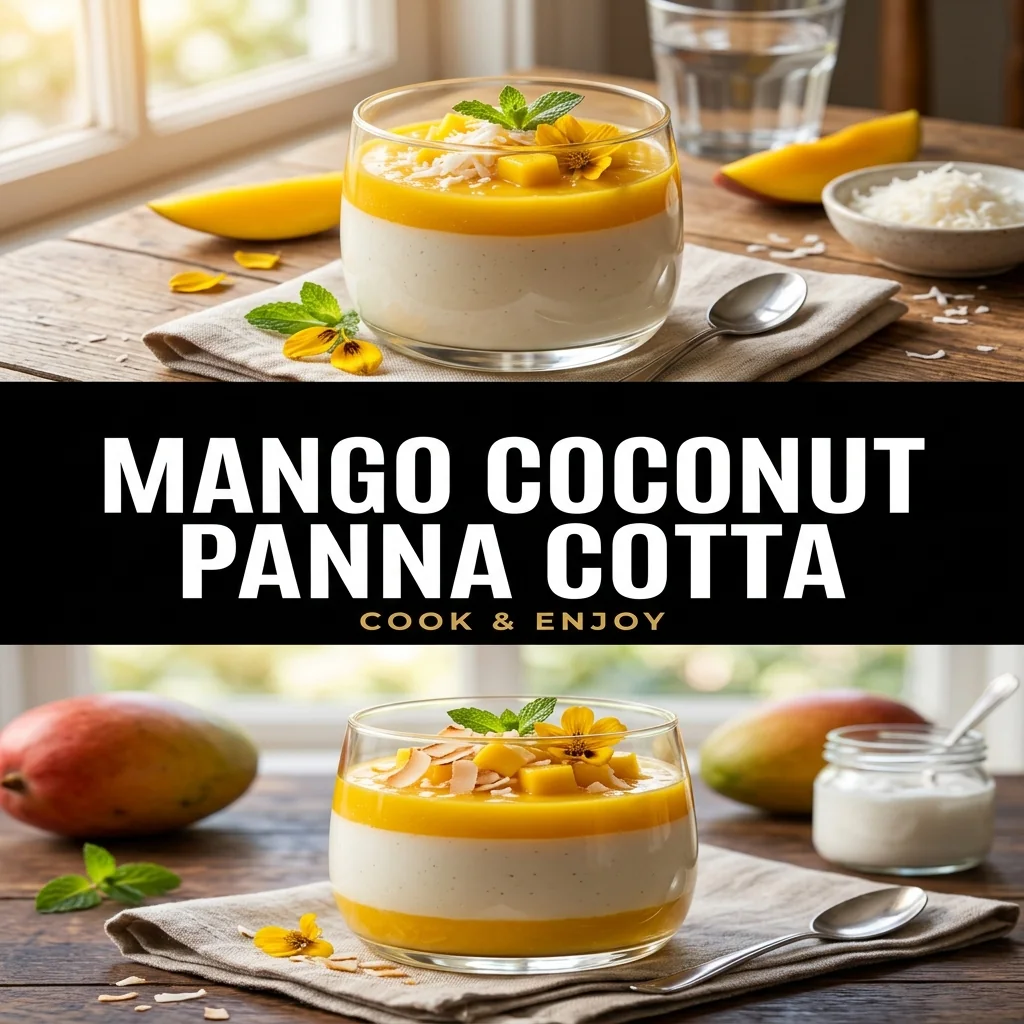
Panna cotta is an Italian classic that relies on gentle thermal control and gelatin rather than baked eggs to achieve its delicate, custard-like wobble. In this tropical variation, coconut milk pairs with a touch of heavy cream to build a rich, satin-smooth base that contrasts against a bright, tangy mango gelee. Unlike custards that demand water baths and exact oven oversight, panna cotta requires only gentle stove heating to melt sugar and dissolve bloomed gelatin. The outcome is light, refreshing, and naturally gluten-free. As an elegant make-ahead dessert, it can be assembled a day before a dinner party, allowing the gelatin matrix to stabilize completely without losing its melt-in-the-mouth texture.
Gelatin Blooming and Temperature Control
Gelatin must always be bloomed in cold water before heating. Cold water allows the individual protein granules to swell uniformly without clumping. When melted into the warm dairy, the temperature should remain between 120°F and 140°F (49°C to 60°C). Never boil the mixture once gelatin is incorporated, as excessive heat denatures the gelatin proteins, significantly weakening their gelling capacity. Gentle residual heat from the cream is more than sufficient to melt the granules into a clear, homogenous suspension.
Balancing Fat and Acidity
Full-fat canned coconut milk provides saturated fat that mirrors traditional dairy cream, giving body and structural integrity to the dessert. Heavy cream is added to soften the assertive coconut flavor and provide familiar dairy roundness. The top layer of pureed mango is balanced with a splash of fresh lime juice. The acid cuts through the richness of the underlying coconut layer, providing essential contrast on the palate and preventing the dessert from feeling heavy or cloying.
Troubleshooting Layer Separation and Texture
If canned coconut milk sits undisturbed, the cream separates from the watery liquid below. Shake the can vigorously before opening, or warm the entire can in hot water if solid fat has solidified at the top. If your mango puree is fibrous, pass it through a fine-mesh sieve after blending to ensure a mirror-like finish. Finally, allow the bottom layer to chill until resilient to gentle pressure before adding the fruit puree; pouring too early creates an unappealing murky swirl.
Before you start
For clean, distinct layers, make sure the coconut base is set enough to support the mango puree without blending into it. When pouring the fruit layer, pour it gently over the back of a spoon rather than dumping it directly onto the delicate cream center. Using full-fat coconut milk is essential; light coconut milk lacks the fat solids required to create a rich, velvety mouthfeel and will yield a watery result.
THE RECIPE
Mango Coconut Panna Cotta
6 servings · 25 minutes preparation · 10 minutes cooking · 240 minutes cooling, chilling or resting
Ingredients
Step-by-step instructions
- Pour 2 tablespoons of cold water into a small bowl, sprinkle 1 1/2 teaspoons of gelatin evenly over the surface, and let stand for 5 minutes until fully hydrated and spongy.
- Combine the shaken coconut milk, heavy cream, 1/3 cup sugar, and salt in a 2-quart saucepan over medium-low heat, stirring constantly until the sugar dissolves and steam begins rising, about 4 to 5 minutes without letting it boil.
- Remove the saucepan from the heat, immediately stir in the bloomed gelatin and vanilla extract, and whisk gently for 1 minute until the gelatin melts completely and the liquid appears uniformly smooth.
- Divide the coconut cream mixture evenly among six 6-ounce glass cups or ramekins, transfer to the refrigerator, and chill uncovered on a flat shelf for at least 2 hours until the surface is softly set to the touch.
- Prepare the mango layer by sprinkling 3/4 teaspoon of gelatin over 1 tablespoon of cold water in a small heatproof bowl, letting it bloom for 5 minutes while pureeing the mango cubes, lime juice, and 1 tablespoon of sugar in a blender until smooth.
- Microwave the bloomed mango gelatin for 10 to 12 seconds on medium power until completely liquified, whisk 3 tablespoons of mango puree into the warm gelatin, and then fold that mixture thoroughly back into the remaining mango puree.
- Spoon the liquid mango mixture evenly over the chilled coconut bases, return the glasses to the refrigerator, and chill for an additional 2 hours until both layers are thoroughly set, firm, and cold before serving.
Kitchen notes
For clean, distinct layers, make sure the coconut base is set enough to support the mango puree without blending into it. When pouring the fruit layer, pour it gently over the back of a spoon rather than dumping it directly onto the delicate cream center. Using full-fat coconut milk is essential; light coconut milk lacks the fat solids required to create a rich, velvety mouthfeel and will yield a watery result.
Storage & make-ahead
Store finished panna cottas covered tightly with plastic wrap in the refrigerator for up to 4 days. Do not freeze, as the gelatin structure will break upon thawing and turn watery. Serve chilled straight from the refrigerator.
An original recipe guide inspired by themes in our Pinterest research. Recipe has not been independently kitchen-tested. AI-generated image is illustrative; your finished dish may look different.
Frequently asked questions
Can I use frozen mango instead of fresh?
Yes, frozen mango chunks work well. Thaw them completely in a bowl and drain any pooled excess liquid before pureeing to avoid watering down the fruit layer, which could otherwise weaken the gelatin set.
Can I unmold these panna cottas onto plates?
This formulation is designed to be eaten from individual glasses. To unmold onto plates, increase the coconut gelatin to 2 teaspoons total so the cream has sufficient structural firmness to stand unsupported when inverted.
Why did my coconut layer separate into two layers while chilling?
Separation happens if the coconut cream mixture is poured while still too hot. Cool the liquid to lukewarm (about 80°F to 85°F / 27°C to 29°C), stirring occasionally, before pouring into serving glasses.