WHY MAKE IT
A little comfort, a lot of flavor.
Unlike butter-based sponge cakes that dry out quickly, olive oil cakes boast an exceptionally moist, velvety crumb that stays supple for days. The liquid fat in olive oil remains completely fluid at room temperature, locking in moisture far more effectively than saturated dairy fats. Paired with fresh citrus juice and essential oils expressed from orange peel, this cake offers a sophisticated balance of fruity richness, mild acidity, and delicate herbal notes. Prepared with staple ingredients and straightforward equipment, the batter requires no complex creaming method. It relies instead on thoroughly whipped whole eggs to create an airy, even structure that supports the weight of the fruit and oil without collapsing.
Selecting the Right Olive Oil
The flavor of the olive oil will directly define the cake. Avoid using neutral light olive oil, which contributes fat without aroma, but also steer clear of aggressively peppery, late-harvest oils that can lend an unpleasantly bitter aftertaste. Look for an extra-virgin olive oil labeled fruity, grassy, or buttery. Spanish Arbequina or Italian Ligurian oils are ideal choices because their mild, rounded fruitiness harmonizes naturally with the sweet acidity of fresh orange juice and vanilla extract.
The Science of Aeration and Crumb Structure
Because this recipe does not utilize the traditional butter-sugar creaming method, initial aeration comes from whipping the eggs and citrus-rubbed sugar together. Whipping until the mixture forms a pale, thick ribbon creates a stable foam that traps tiny air pockets. As the olive oil is streamed in, the lecithin in the egg yolks acts as a natural emulsifier, binding the oil droplets into the liquid base. This emulsion prevents oil from pooling in the bottom of the pan during baking.
Preventing a Dense, Gummy Center
Olive oil batters are heavier than standard butter batters, making them susceptible to underbaking in the middle. Ensure your baking powder and soda are fresh, as chemical leaveners provide the lift required once the wet batter enters the heat. Always test doneness with a thin wooden skewer inserted dead-center into the crumb; it must emerge completely free of wet batter. If the top browns prematurely before the center finishes, tent loosely with aluminum foil.
Before you start
Rubbing the citrus zest directly into the sugar crystals before adding liquid is a crucial step. The abrasive sugar granules rupture the oil glands in the orange peel, releasing volatile aromatic oils that distribute evenly throughout the batter. Choose a fruity, high-quality extra-virgin olive oil with minimal bitterness, as its distinct character directly forms the flavor backbone and ultra-moist texture of the baked cake.
THE RECIPE
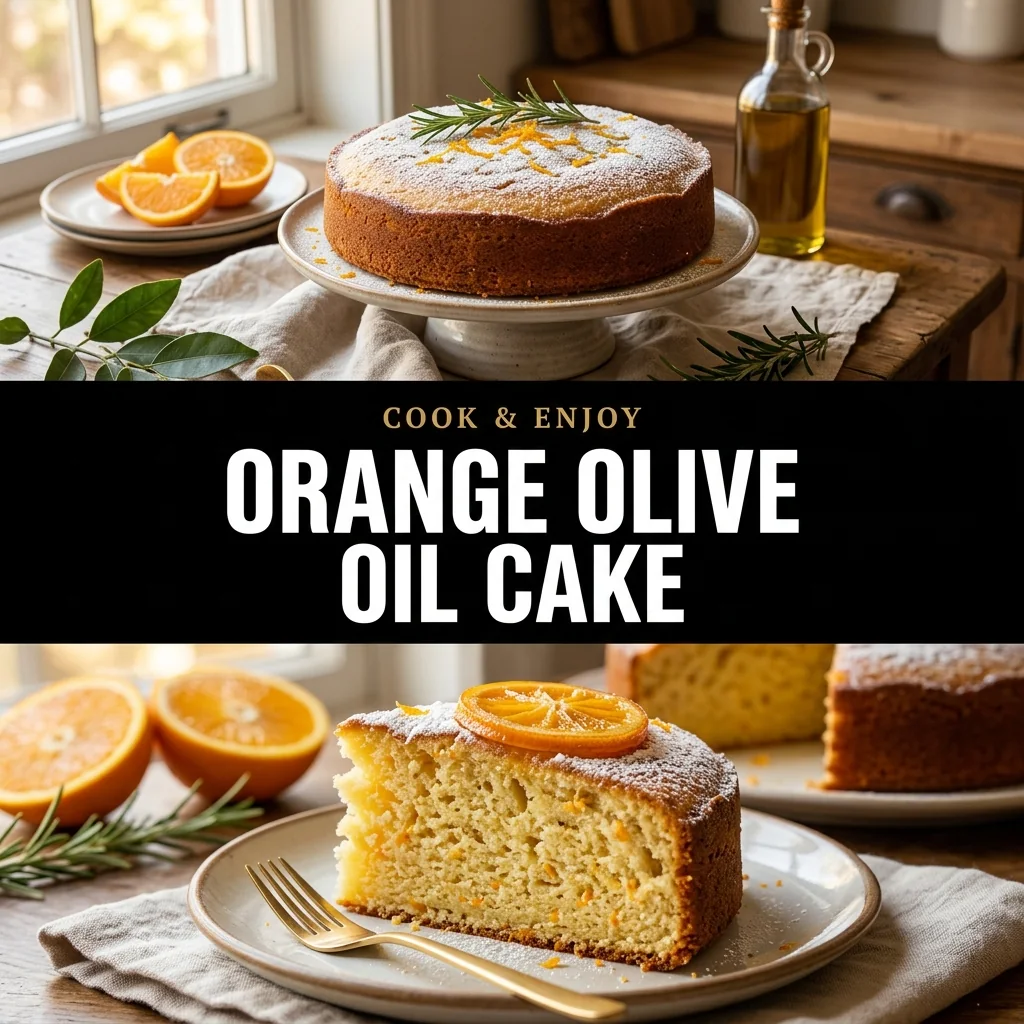
Orange Olive Oil Cake
8 servings · 20 minutes preparation · 45 minutes cooking · 60 minutes cooling, chilling or resting
Ingredients
Step-by-step instructions
- Preheat the oven to 350°F (177°C), grease a 9-inch springform pan with olive oil, line the bottom with a circle of parchment paper, and lightly grease the parchment surface.
- Whisk together the all-purpose flour, baking powder, baking soda, and salt in a medium bowl until thoroughly combined, then set the dry ingredients aside.
- Place the granulated sugar and freshly grated orange zest into a large mixing bowl, and use your fingertips to rub the zest into the sugar for 2 minutes until moist, fragrant, and pale orange.
- Add the 3 large eggs to the scented sugar and beat with a hand mixer or stand mixer on medium-high speed for 3 to 4 minutes until pale, thickened, and increased in volume.
- With the mixer running on low speed, slowly stream in the extra-virgin olive oil in a steady trickle, followed by the milk, fresh orange juice, and vanilla extract until emulsified.
- Add the whisked dry ingredients to the wet mixture in two additions, gently folding with a silicone spatula just until no flour streaks remain, being careful not to overmix.
- Pour the batter into the prepared springform pan, smoothing the top, and bake at 350°F (177°C) for 42 to 45 minutes until deep golden brown and a cake tester inserted into the center emerges clean.
- Cool the cake in the pan on a wire rack for 20 minutes, run an offset spatula around the edges, release the springform collar, and cool completely for 40 minutes before dusting with confectioners' sugar.
Kitchen notes
Rubbing the citrus zest directly into the sugar crystals before adding liquid is a crucial step. The abrasive sugar granules rupture the oil glands in the orange peel, releasing volatile aromatic oils that distribute evenly throughout the batter. Choose a fruity, high-quality extra-virgin olive oil with minimal bitterness, as its distinct character directly forms the flavor backbone and ultra-moist texture of the baked cake.
Storage & make-ahead
Store the cooled cake under a cake dome or wrapped snugly in plastic wrap at room temperature for up to 4 days. The crumb actually improves on day two as the olive oil and citrus oils equilibrate. It may also be frozen, well-wrapped, for up to 2 months.
An original recipe guide inspired by themes in our Pinterest research. Recipe has not been independently kitchen-tested. AI-generated image is illustrative; your finished dish may look different.
Frequently asked questions
Can I bake this in a standard cake pan instead of a springform?
Yes, you can use a standard 9-inch round cake pan with at least 2-inch sides. Line the bottom with parchment paper and leave a slight overhang on two sides so you can lift the delicate cake out cleanly after cooling.
Why did my cake sink in the center as it cooled?
Sinking usually indicates underbaking, overmixing the batter after adding flour, or opening the oven door too early during baking, which causes the rising steam pockets to collapse before the crumb matrix fully solidifies.
Can I substitute blood oranges or lemons?
Yes, blood oranges provide a striking flavor and slight color tint. If substituting lemons, reduce the lemon juice to 1/4 cup and increase the milk by 2 tablespoons to balance the higher acidity.